
How to Use a Mars Coat King: A Practical Guide to De-Shedding and Coat Maintenance
, by Martin Forshaw, 6 min reading time
, by Martin Forshaw, 6 min reading time
A Mars Coat King can be one of the most useful tools in a grooming kit for dogs with thick, dense, double or wiry coats.
Used correctly, it helps remove loose hair, reduce excess undercoat and keep the coat looking tidier between full grooming sessions. It can also make brushing easier, reduce shedding around the home and help prevent loose coat from becoming compacted.
The key is choosing the right model for the coat and using it gently.
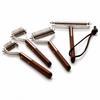
A Coat King has a row of specially shaped blades designed to move through the coat and lift out loose hair and undercoat.
It is particularly useful for dogs that carry a lot of dead hair, seasonal undercoat or excess bulk through the body, neck, trousers or feathering.
It can help with:
Removing loose undercoat
Reducing shedding
Tidying dense or overgrown coat
Thinning bulky areas
Maintaining wiry, double and heavy coats
Preparing the coat before brushing and bathing
A Coat King is not designed to cut a full groom into the coat like a clipper. It should be used as a controlled maintenance tool, with light strokes and regular checks.
For the best result, make sure the coat is dry and free from knots.
Brush the dog first using a suitable slicker brush, pin brush or comb. Any mats or tangles should be dealt with before using a Coat King, as pulling a bladed tool through knots can be uncomfortable and may damage the coat.
Check the skin for soreness, irritation, cuts, lumps or sensitive areas. Do not use a Coat King over broken skin or inflamed areas.
Hold the handle comfortably and place the tool lightly into the coat.
Use short, gentle strokes in the direction of hair growth. Let the blades do the work—there is no need to press hard or drag the tool through the coat.
Work in small sections and regularly remove the loose hair collected in the blades.
A good routine is:
Brush the coat through first
Start on a broad, less-sensitive area such as the back or side
Use light strokes in the direction of hair growth
Check the amount of hair being removed after every few passes
Move gradually around the body
Finish by brushing or combing through the coat again
Stop if the tool begins catching, if the dog seems uncomfortable or if you are removing more coat than intended.
This depends on the breed, coat type, season and the model you are using.
For many dogs, occasional use during periods of shedding is enough. A dog with a heavy double coat may benefit from more regular maintenance during spring and autumn, while a dog with a finer coat may only need light use every few weeks.
It is always better to use a Coat King little and often rather than trying to remove a large amount of coat in one session.
Overusing any stripping or de-shedding tool can thin the coat too much or irritate the skin.
Coat Kings are often most useful on broad, densely coated areas, including:
Back and sides
Neck and shoulders
Chest
Trousers
Feathering
Tail
Heavy areas of undercoat
Take extra care around delicate areas such as the face, ears, belly, armpits, groin, skin folds and joints.
For fine facial hair, ears or very sensitive areas, a comb, scissors or a smaller specialist grooming tool may be more appropriate.
A Coat King should glide through the coat with light pressure. Pressing hard can make the tool uncomfortable and may take out more coat than intended.
Do not use a Coat King to pull through knots or matted coat. Remove tangles first with a suitable comb, dematting tool or professional grooming advice.
Work with the coat rather than against it. This is generally more comfortable for the dog and gives a more controlled finish.
A very coarse Coat King on a fine coat can remove too much hair. A very fine Coat King on a thick, heavy coat may not work efficiently.
Choose the blade count and tooth spacing to suit the individual coat.
A Coat King is one tool in the kit. It works best alongside regular brushing, combing, bathing and appropriate trimming or clipping.
It can be useful for controlled coat maintenance on some wire-coated breeds, particularly where the aim is to remove loose coat or reduce bulk.
However, for dogs being prepared for the show ring, or breeds where preserving a traditional harsh jacket is important, hand stripping may be the preferred method.
If you are unsure, speak to the breeder, a breed specialist or an experienced hand-strip groomer before using a Coat King extensively.
The best model depends on coat texture, coat density, dog size and the area you are working on.
As a rough guide:
Fewer blades / wider spacing: thicker, coarser or wirier coats
More blades / closer spacing: finer coats and finishing work
Wide Coat Kings: useful for larger breeds and bigger body areas
For help choosing the right model, see our Mars Coat King Product Guide, including a breed-by-breed starting point.
[Read the Mars Coat King Product Guide]
After use, remove trapped hair from between the blades and wipe the tool clean.
Store it dry and safely, ideally away from damp conditions. Keep the blades protected where possible, especially if the tool is stored in a grooming box or travels with other equipment.
Replacement blades are available for selected Mars Coat King models, helping you extend the life of a well-used tool.
[Shop Mars Coat Kings]
Every coat is different—even within the same breed.
Contact the Diamond Edge team with your dog’s breed, coat type, size and what you would like to achieve. A clear photograph of the coat can also help us suggest a suitable starting point.